 Odacitizen.com News, Politics, Entertainment News & More
Related Articles
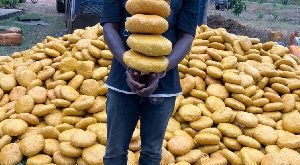


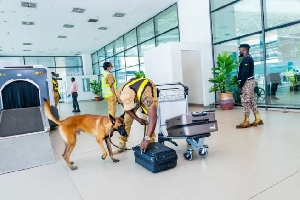
The Narcotics Control Commission (NACOC) has dismissed media reports suggesting that a senior manager of a food manufacturing company was arrested over an alleged cocaine smuggling attempt.
According to NACOC, the suspects arrested have no employment or managerial ties to any of the popular food brands whose products were used to conceal the narcotics.
Speaking on TV3’s Ghana Tonight on Tuesday, February 11, 2026, Deputy Director General of NACOC, Alexander Twum-Barimah, clarified that the companies whose products appeared in the operation were victims of misuse, not collaborators.
“The persons arrested are not managers or staff of any popular food manufacturing company. From where our investigations have reached, they are not linked to these companies in any way,” he stated.
Food Brands Used as Concealment, Not Complicit
Twum-Barimah explained that smugglers deliberately exploited well-known wholesome food brands to mask illegal shipments, stressing that the companies had no knowledge or involvement in the criminal activity.
He disclosed that NACOC has encountered at least four separate incidents where food products were used as concealment tools for cocaine at different times.
For reasons of fairness, corporate integrity, and ongoing investigations, NACOC has chosen not to publicly name the brands involved.
“The companies themselves are not responsible for the actions of these individuals. That is why we have refrained from mentioning any brand names,” he explained.
Netherlands Interception and Kotoka Airport Seizure
The Deputy Director General revealed that the earliest major incident involved approximately 250 kilograms of cocaine, which was intercepted in the Netherlands after being shipped from Ghana.
The narcotics were concealed within branded food products packed in shipping containers.
He further disclosed that a second incident occurred in 2025 at the cargo terminal of Kotoka International Airport, where cocaine was again hidden among food products.
“In that case, there was no individual present when the items were intercepted. We seized the products and commenced investigations,” he said.
That particular consignment contained about 3 kilograms of cocaine, which was sent to the Ghana Standards Authority for testing and later confirmed to be cocaine.
Pattern Detected Through Surveillance
Following the repeated discoveries, NACOC intensified surveillance to determine whether the incidents were connected.
Twum-Barimah revealed that as far back as 2022, officers had intercepted another case involving a different food product mixed with cocaine.
In all instances, investigators found that part of the packaging contained genuine food, while other sections were modified to conceal the drugs.
“So we decided to investigate deeper. Through CCTV footage and further intelligence work, we were able to arrest a suspect when he attempted to repeat the act for the third time,” he said.
Arrests Made, Equipment Seized
According to NACOC, the latest operation led to the arrest of a male suspect and a female accomplice, with officers discovering specialised machines allegedly used to repackage food products and conceal narcotics.
That batch contained 1.05 kilograms of cocaine, officials confirmed.
When asked whether the earlier cases, including the 250kg seizure in the Netherlands, involved the same food manufacturing company, Twum-Barimah clarified that multiple brands were involved.
“No. Three different brands were involved. The fourth case was not really tied to any brand,” he explained.
“In the Netherlands case, one company’s food product was used. In the Kotoka case, products from various companies were used.”
He added that the concealment method was consistent, with food products arranged on the outer layers while cocaine was hidden within.